

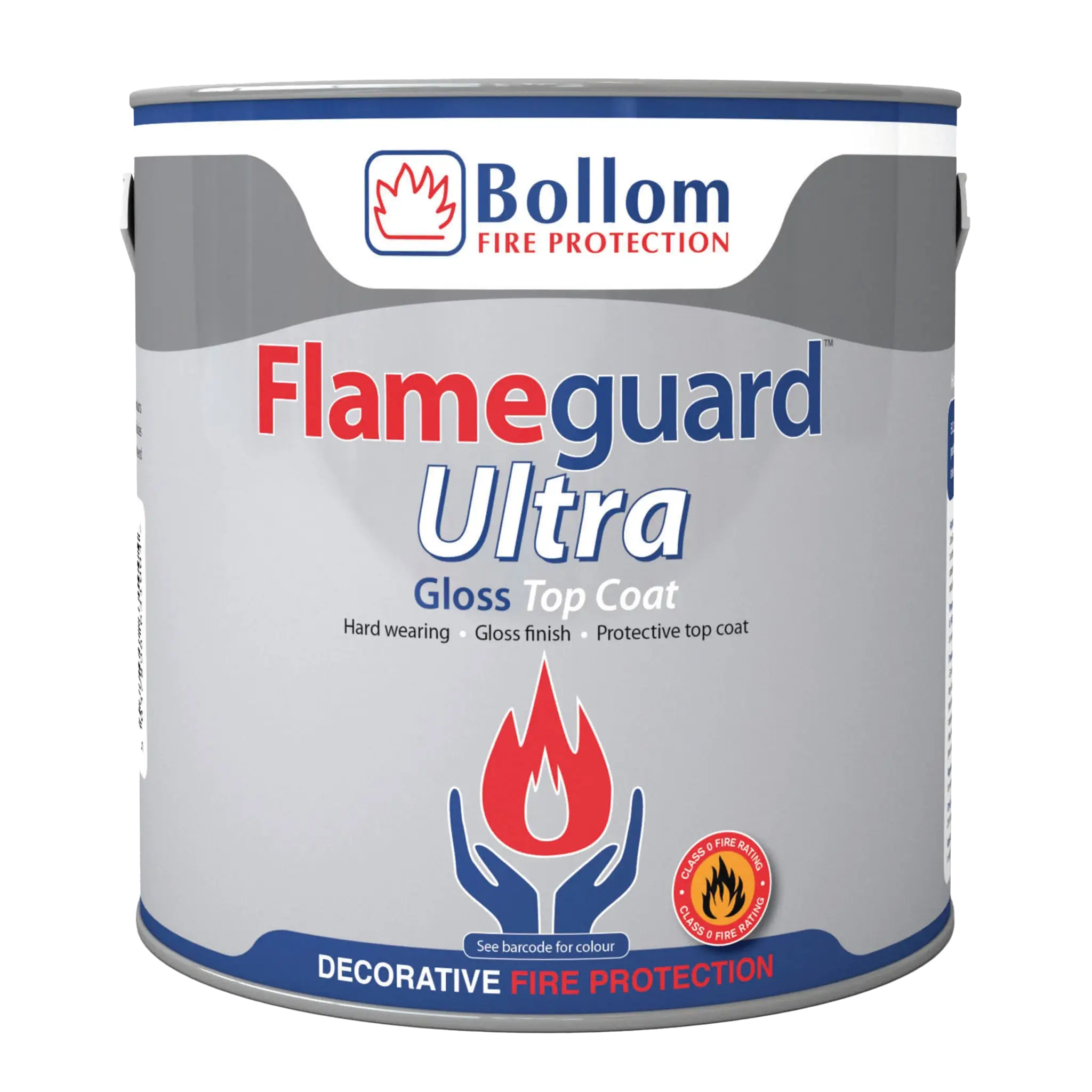


Bollom Flameguard Ultra Gloss Topcoat is a solvent-based protective and decorative finish for specified Bollom fire protection systems on interior wood and steel. It provides a hard-wearing white gloss finish and can be applied by brush or roller.
When applied over Bollom Broflame Ultra Basecoat on suitable wood, the complete system is tested to BS EN 13501-1:2018. It achieves B-s1, d0 on previously painted wood and B-s2, d0 on bare wood. These classifications mean:
Suitable for new and previously painted interior masonry and other compatible non-combustible surfaces, including surfaces previously coated with up to 10 layers of conventional paint when used as part of the appropriate Flameguard system. It can also be used as the decorative topcoat within specified Flameguard systems for suitable timber and wood-based surfaces. Always use the appropriate primer, basecoat and topcoat combination for the surface being treated and the required level of fire protection.
Bollom Flameguard includes a range of primers, basecoats and decorative topcoats designed to work together as specified fire protection systems. The correct combination will depend on the substrate, its existing coatings and the required finish.
| Product | Use |
| Bollom Broflame Ultra Basecoat | Fire-protective basecoat for suitable timber and wood-based surfaces |
| Bollom Intulac Ultra Intumescent Clear Basecoat | Decorative fire-protective topcoat providing an eggshell finish |
| Bollom Flameguard Ultra Vinyl Matt Topcoat | Decorative fire-protective topcoat providing a matt finish |
| Bollom Flameguard Ultra Gloss Topcoat | Decorative fire-protective topcoat providing a durable gloss finish |
Good surface preparation is essential for adhesion and the correct performance of the Bollom Flameguard system. Ensure surfaces are sound, clean and dry, removing any loose, poorly adhered or incompatible coatings before application.
Take extra care when removing or sanding paint applied before the 1960s, as it may contain lead; avoid creating dust and follow appropriate guidance for safe removal and disposal
Always test a small area before application to confirm compatibility, adhesion and the final appearance. Follow the manufacturer's instructions and ensure the surface has been correctly prepared before starting.
Once dry, take care of the finished surface to maintain its appearance and the integrity of the Bollom Flameguard system. Avoid cleaning methods or subsequent coatings that could damage or compromise the protective finish.
How do I get fire certification?
Keep proof of purchase and the batch numbers of the products used, along with the site details. Contact Bollom Customer Services on 0191 410 6611 with this information and they will provide the relevant Certificate of Supply within 5 working days.
What is Bollom Flameguard Ultra Gloss Topcoat used for?
It is a protective and decorative topcoat for interior walls, ceilings and trim, designed for use as part of a specified Bollom Flameguard fire protection system.
What finish does Bollom Flameguard Ultra Gloss provide?
It dries to a durable gloss finish and is currently available in white.
What fire classification does Bollom Flameguard Ultra Gloss achieve?
When applied over Bollom Broflame Ultra Basecoat, the complete system achieves B-s1, d0 on suitable previously painted wood and B-s2, d0 on suitable bare wood, tested to BS EN 13501-1:2018. The basecoat and topcoat must be applied according to the manufacturer's instructions and specified coverage rates.
Can Bollom Flameguard Ultra Gloss be applied over existing paint?
Yes, it can be used on suitably prepared previously painted surfaces, including masonry coated with up to 10 layers of conventional paint, subject to the requirements of the specified Flameguard system.
Can Bollom Flameguard Ultra Gloss be used on wood?
Yes, it can be used as a decorative topcoat over the appropriate Bollom fire-protective basecoat on suitable timber and wood-based surfaces.
Can Bollom Flameguard Ultra Gloss be thinned?
No. Bollom Flameguard Ultra Gloss should not be thinned and must be applied at the specified coverage rate to achieve the required system performance.
How long should I leave Bollom Flameguard Ultra Gloss between coats?
Allow a minimum of 16 hours at 20°C between coats. Cooler temperatures or higher humidity may increase the drying time.