


Projects (A-Z)
Brands (A-Z)
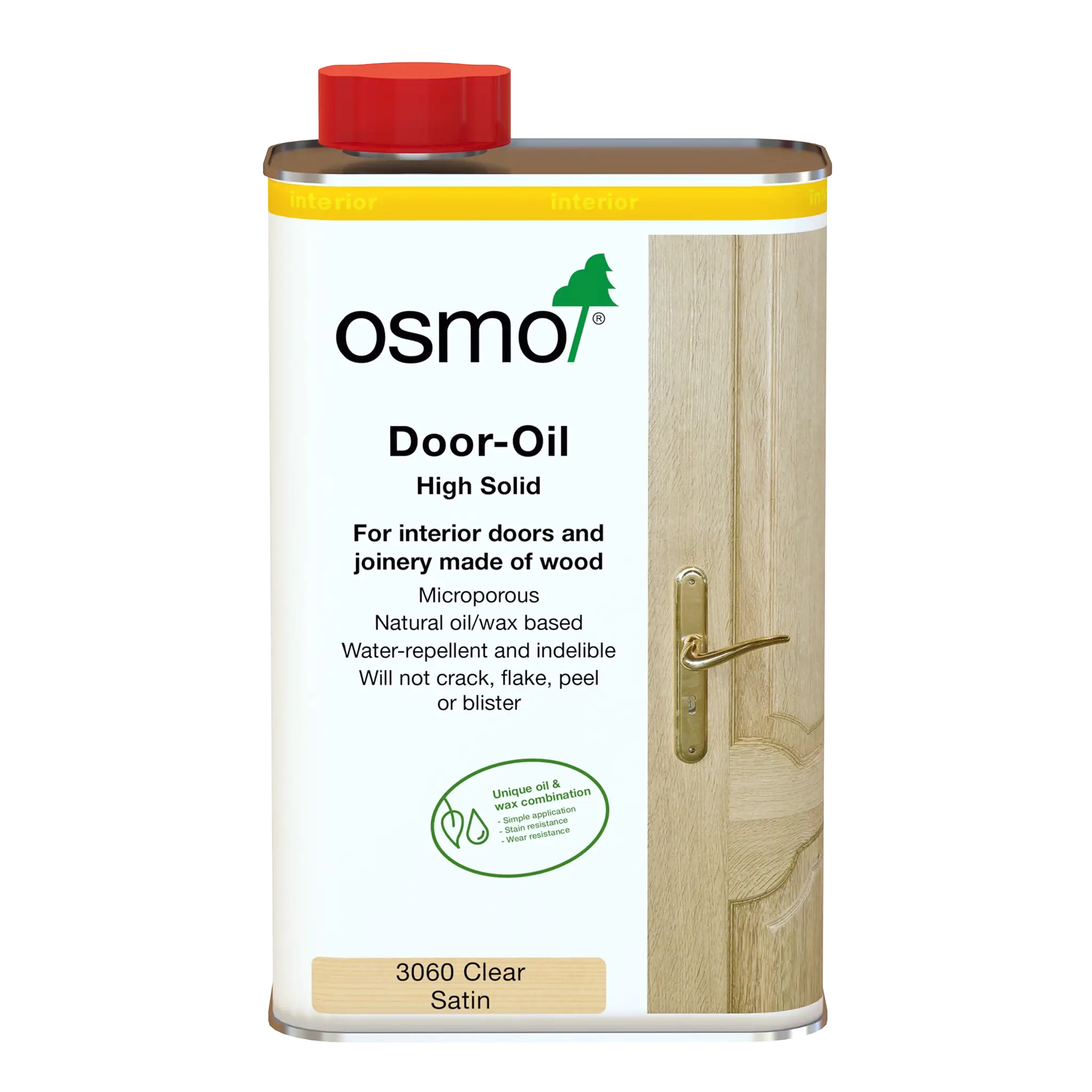
Osmo Door Oil
A highly durable, protective oil for softwood and hardwood interior doors, including solid wood, engineered and veneered doors.
Features
- Professional grade door oil provides durable protection for interior wooden doors
- Hardwearing finish resists scuffs, scratches, dirt and moisture to keep doors looking their best
- Water repellent formula helps reduce moisture movement that can lead to shrinking and warping
- Microporous finish allows the wood to breathe and will not crack, flake, peel or blister
- Easy to apply and maintain, making it simple to refresh the finish when required
- Safe for humans, animals and plants once fully dry, making it suitable for use throughout the home
Brand
Drying time
24 hrs
Coverage
Up to 24 m2 per litre
No. of coats
2
Size
5ml sample
125ml
1L
MPN
Please Select Size/Option
GTIN
Please Select Size/Option
Overview
Osmo Door-Oil brings out the natural character of interior wooden doors while providing an attractive finish that is easy to care for. Its clear formulation allows the colour and grain of the timber to remain visible, making it suitable for both new doors and renovation projects.
Door-Oil 3060 Clear Satin enriches the colour and grain of the wood with a subtle satin sheen. On lighter timbers, where a clear oil can create a darker or slightly wet appearance, Door-Oil 3033 Raw helps retain the paler, untreated look of the wood.
Suitability
Always check the manufacturer's label on the door or with the door manufacturer before applying a door finish to confirm suitability. Some products may not be suitable for some types of door.
Due to the small amount of white pigments in the 'Raw' version of this product (3033), a faint white sheen may be visible on darker, exotic wood species. For this reason a test area is strongly recommended. For dark and extractive-rich hardwoods such as Wenge, Merbau and Jatoba, we recommend using Osmo Wood Wax Finish Extra Thin (1101). This is a very thin oil that can better penetrate the dense wood grain of exotic hardwoods.
Customers Also Bought
Preparation
Preparation
Back
Ensure the door is clean, dry and free from frost before application. The moisture content of the wood should not exceed 18%.
- Remove any dirt, grease and other surface contaminants that could affect adhesion
- Clean previously oiled doors thoroughly with methylated spirit and allow the surface to dry completely
- Completely remove old paint, varnish and lacquer to expose clean, bare wood
- Take extra care when removing paint finishes dating from before 1960, as these may contain lead. Follow appropriate safety guidance and avoid creating or inhaling dust
- Fill cracks, joints and holes with a suitable Osmo Wood Filler, following the manufacturer's drying instructions
- Sand the wood evenly, finishing with no finer than 120 grit sandpaper
- Remove all sanding dust with a vacuum cleaner or a lint-free cloth lightly dampened with methylated spirit
Interior doors in moisture-rich areas, such as kitchens and bathrooms, can be treated with Osmo Wood Protector (4006) before applying Door-Oil for additional protection. This base coat is only recommended beneath Door-Oil 3060 Clear Satin, as it can darken the wood and may prevent Door-Oil 3033 Raw from achieving its intended untreated appearance.
Application
Application
Back
Always test Osmo Door-Oil on a small, inconspicuous area to check suitability and the final appearance. Stir thoroughly before and during use, and ensure the room is well ventilated throughout application and drying.
- Apply a thin, even coat using an Osmo Soft Tip Brush, Osmo Microfiber Floor Roller in Freshbox, clean lint-free cloth or sponge
- Work in the direction of the wood grain and spread the oil thoroughly, removing any excess product from the surface
- Allow the first coat to dry in accordance with the manufacturer's instructions, maintaining good ventilation throughout the drying period
- Apply a second thin coat in the same way to achieve an even appearance and the recommended level of protection
- Avoid applying the oil too heavily, as over application or poor ventilation can result in extended drying times or a sticky finish
- Where possible, treat all sides and edges of the door before installation to provide more complete and consistent protection
Finishing
Finishing
Back
Osmo Door-Oil does not require an additional top coat. Once the final coat has dried thoroughly, doors treated with Door-Oil 3060 Clear Satin can be lightly buffed with a clean, lint-free cloth to enhance the sheen and create a more polished appearance.
Door-Oil 3033 Raw is intended to retain the natural, untreated appearance of lighter timber, so buffing or applying a separate polish may alter the final look. If a clear wax or polish is used over either finish, check that it is compatible and test it on an inconspicuous area first.
Aftercare
Aftercare
Back
Cleaning
Remove loose dust and dirt with a soft cloth before cleaning. Light marks and everyday dirt can be removed using Osmo Spray Cleaner (8026) and a clean, lint-free cloth. For more stubborn marks, use Osmo Wash and Care (8016), following the manufacturer's dilution and application instructions. Avoid abrasive cleaners or harsh cleaning products that could damage the finish.
Maintenance
Periodically inspect the door for signs of wear, particularly around handles, edges and other frequently touched areas. When the finish begins to look dull or worn, clean the door thoroughly and allow it to dry before applying a thin maintenance coat of Osmo Door-Oil. Apply the oil sparingly and evenly, removing any excess product and allowing it to dry with good ventilation.
Repair
Dull areas and light surface marks can be refreshed with Osmo Liquid Wax Cleaner. For deeper scratches, stains or localised damage, lightly sand the affected area, remove all sanding dust and apply a thin coat of Osmo Door-Oil. Localised repairs may initially differ slightly in appearance from the surrounding finish, so test the repair method on an inconspicuous area where possible.
Thinning/Cleaning
Thinning/Cleaning
Back
Thinning
Osmo Door-Oil is supplied ready to use and should not be thinned. Stir thoroughly before and during application to maintain an even consistency.
Cleaning Equipment
Remove as much excess oil as possible from brushes, rollers and other equipment immediately after use, then clean thoroughly with Osmo Brush Cleaner and Thinner (8000). Do not use water to clean application equipment.
Allow tools to dry completely before storing them. Oil-soaked cloths and application materials can generate heat as they dry, so lay them flat outdoors to dry or store them in a sealed metal container before disposing of them safely.
F.A.Q.
F.A.Q.
Back
Here are some commonly asked questions about Osmo Door-Oil. For more general advice on choosing and applying finishes to interior doors, visit our door finishes FAQ page.
Can Osmo Door-Oil be used on oak veneered doors?
Osmo Door-Oil may be suitable for oak veneered doors, but compatibility can depend on the materials and adhesives used in their construction. Always check the door manufacturer's finishing instructions before application, as using an unsuitable product could damage the veneer or affect the warranty. If the manufacturer cannot be identified, test the oil on a small, inconspicuous area first.
How long does Osmo Door-Oil take to dry?
Osmo Door-Oil is touch dry in approximately 6 hours and fully dry after around 24 hours under suitable conditions. Low temperatures, high humidity, poor ventilation or applying too much oil can extend the drying time. Apply each coat thinly and maintain good airflow throughout drying.
Which Osmo Door-Oil is best for oak doors?
Both versions can be used on suitable oak doors, but they produce different appearances. Door-Oil 3060 Clear Satin enriches the natural colour and grain, giving the timber a slightly darker satin finish. Door-Oil 3033 Raw helps retain the paler, untreated appearance of lighter oak.
Does Osmo Door-Oil darken the wood?
Door-Oil 3060 Clear Satin can deepen the natural colour of the timber and create an appearance similar to wood wiped with a damp cloth. Testing the wood with a clean, lightly dampened cloth can give an indication of the likely colour change. Door-Oil 3033 Raw is formulated to minimise this effect on lighter woods and retain a more natural, untreated appearance.
How many doors will 1 litre of Osmo Door-Oil cover?
One litre covers up to 24m² with a single coat, depending on the condition and absorbency of the wood. As an approximate guide, this should be enough to apply two coats to both sides of around four standard doors. Actual coverage will vary according to the size and design of the doors, including whether they contain glass panels.
Should Osmo Door-Oil be applied before or after hanging the door?
Where possible, apply Osmo Door-Oil before hanging the door. This makes it easier to treat the faces and edges evenly and helps prevent runs around hinges and fittings. Check the door manufacturer's instructions to confirm which surfaces and edges should be finished, particularly when treating engineered or veneered doors.
Can Osmo Door-Oil be applied over a waxed door?
No. Wax can prevent the oil from penetrating and bonding evenly with the wood. The existing wax must be completely removed and the door sanded back to clean, bare timber before applying Osmo Door-Oil. Remove all sanding dust and test the prepared surface on an inconspicuous area before continuing.
Datasheets
Reviews
Reviews
Back
332 customer reviews
4.7/5.0
based on last 18+ months
5 stars
297
4 stars
29
3 stars
2
2 stars
1
1 star
3
Great product
Great to use and Great looking finish
Peter Murphy. Raw 3033, 1L (04/10/26)
Excellent for unfinished door
Really good product I love Osmo products really does he job
Patricia Hall. Satin 3060, 125ml (23/09/26)
Osmo all the way
I’ve used osmo before on floors and worktops but the door oil was the only one recommended by Howdens for the new doors.
Easy to apply
Ingrid Jamieson. Raw 3033, 1L (17/09/26)
Pricey
Very good finish and easy to apply.
MK. Satin 3060, 125ml (16/08/26)
Good product and promptly delivered
Osmo door oil is very good and I just needed a small tin to finish off some adjusted door jambs on some new internal oak doors.
Paul Keech. Satin 3060, 125ml (15/08/26)
Great product - efficient service
Bought to treat 10 internal doors, easy application and lovely finish on untreated oak wooden doors. Price and service 5*, absolutely no complaints. Thanks
Jon. Satin 3060, 1L (09/08/26)
Good
Does the job perfectly seals bare wood and protects it
Smeg. Satin 3060, 125ml (01/08/26)
Lovely finish to wood
Easy to apply, protects wood surfaces and makes doors / skirting boards look great. Only issue with light wood such as oak is that each layer of oil darkens the colour of the wood slightly.
Heather Clarke. Satin 3060, 1L (16/05/26)
Not enough
There was very little to work with in the packet and not worth the money. Expensive with the shipping cost.
Keith Wassell. Satin 3060, 5ml sample (11/02/26)
Size of product surprised me
Product is good and we have used it on all the new oak pa els.we have installed.
Jacqueline Calladine. Satin 3060, 125ml (13/01/26)
Load 10 more reviews