

New-build gardens often arrive as a blank canvas. That gives you plenty of freedom, but it can also leave you surrounded by large areas of new, untreated timber.
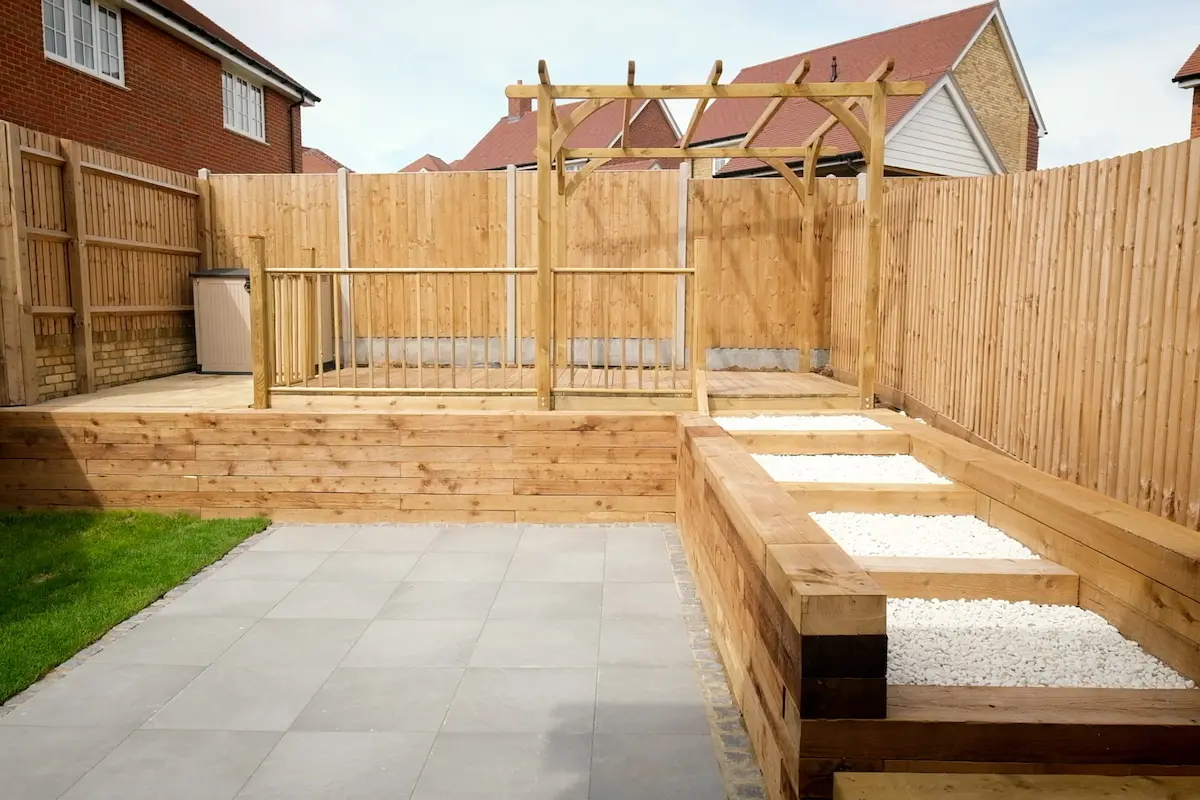
At Yasmin and Tom’s home, the garden contained plenty of wood that needed both protection and personality. The fence stretched around the garden, Tom had built an impressive timber pergola, and a sizeable deck formed the main seating and entertaining area.
Rather than apply one finish to everything, Yasmin and Tom chose three different products and colours:
- Sadolin Classic All Purpose Woodstain in Burma Teak for the fencing
- Cuprinol Garden Shades in Black Ash for the pergola
- Liberon Superior Decking Oil in Medium Oak for the deck boards
Each finish performs a different job. Together, they protect the timber while creating a coordinated garden filled with warm wood tones and bold contrast.
Why new garden timber needs protection
Fresh timber may look clean and attractive, but outdoor exposure soon starts to change it.
Sunlight can fade the natural colour and gradually turn unprotected wood grey. Rain causes timber to absorb and release moisture, while algae and surface dirt can build up in damp or shaded areas.
Regular changes in moisture can also contribute to splitting, swelling and movement.
Treating outdoor timber helps to:
- Reduce the effects of weathering
- Repel moisture
- Slow down colour loss
- Make the surface easier to maintain
- Add colour and character to the garden
- Prolong the useful life of the timber
The right product depends on the surface. Fence panels, structural timber and deck boards all face different levels of wear, so they do not necessarily need the same finish.
Creating a plan for the garden
Yasmin and Tom selected their finishes through the Wood Finishes Direct website before starting the project.
They did not simply choose three similar shades of brown. Instead, they used colour and contrast to define the different parts of the garden.
The Sadolin Burma Teak woodstain adds warmth to the fence while keeping the grain visible. The Garden Shades in Black Ash turns the pergola into a strong focal point. The Liberon Medium Oak Decking Oil enhances the deck without covering its natural texture.
Yasmin had gathered inspiration from Instagram and Pinterest, so she already had a clear idea of the finished look she wanted. The darker pergola represented the boldest decision, but it also became her favourite part of the completed garden.

Preparing new fencing, decking and garden timber
New wood normally requires less corrective work than older, weathered timber, but you should not skip preparation.
Start by checking each surface for:
- Dirt and building dust
- Pencil marks or labels
- Rough edges
- Splinters
- Resin or oily deposits
- Loose screws, nails or fixings
- High moisture levels
- Existing factory-applied treatments
Brush the timber thoroughly and lightly sand rough or sharp areas. Remove all sanding dust before applying the finish.
New decking may contain natural oils or moisture that stop a finish from penetrating evenly. Some pressure-treated timber also needs time to weather before treatment.
A simple water-drop test can help you judge absorbency. Place a small amount of water onto the surface. If the timber quickly absorbs it, the wood should accept a penetrating finish. If the water sits in beads, the timber may need more time or additional preparation.
Always follow the instructions for the particular product and test the chosen finish on a small, inconspicuous area first.
Treating the fence with Sadolin Classic in Burma Teak
Tom chose Sadolin Classic All Purpose Woodstain in Burma Teak for the garden fencing.
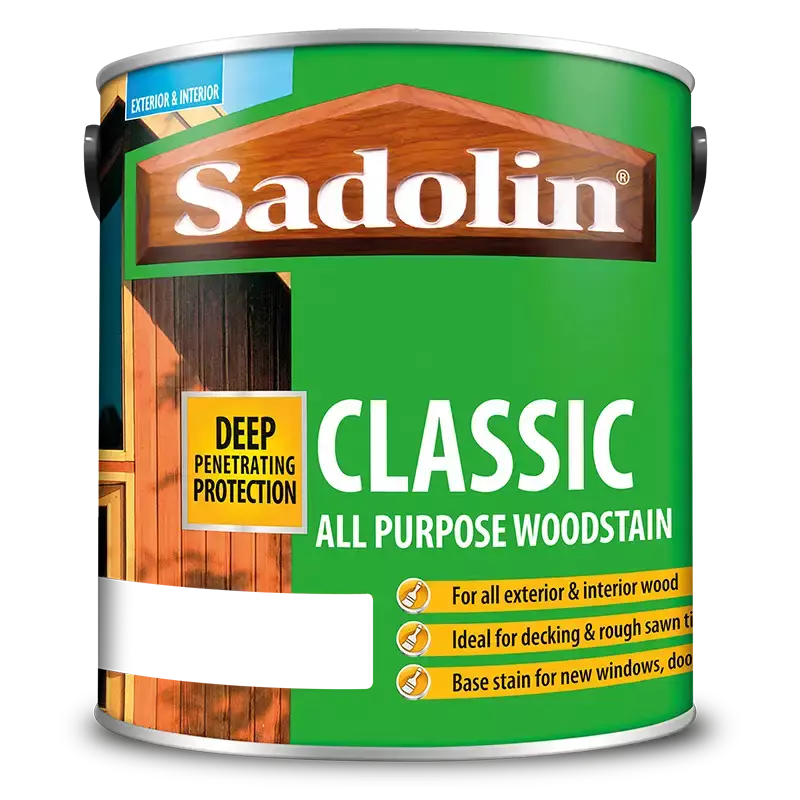
Sadolin Classic All Purpose Woodstain
A deep-penetrating, solvent-based woodstain that colours and protects
timber while keeping its natural grain visible. Tom used Burma Teak
to bring a rich, warm tone to the garden fencing.
No. of coats: 1–2
Sizes: 1L, 2.5L and 5L
Coverage: Up to 10m² per litre
Find out more
Sadolin Classic is a solvent-based, penetrating woodstain that colours and protects the timber without hiding its natural grain. Rather than forming a heavy painted layer, it works within the surface of the wood and creates a translucent finish.
The Burma Teak shade brings a rich, warm tone to the fence. It also provides a softer backdrop than a solid opaque colour would have created.
Despite never having painted a fence before, Tom found the application straightforward. Once he had established a rhythm, he described himself as being “in the zone”.
How to apply woodstain to a fence
Stir the woodstain thoroughly before starting and continue to stir it occasionally during application.
Use a good-quality exterior brush and apply the product in the direction of the grain. Work systematically across one fence panel at a time and spread the stain evenly.
Pay extra attention to:
- Cut ends
- The tops of boards
- Panel edges
- Joints between pieces of timber
- Areas close to the ground
These sections often absorb more moisture and may weather faster than the face of the boards.
Avoid leaving thick patches or runs. A translucent woodstain will reveal uneven application more readily than an opaque fence paint.
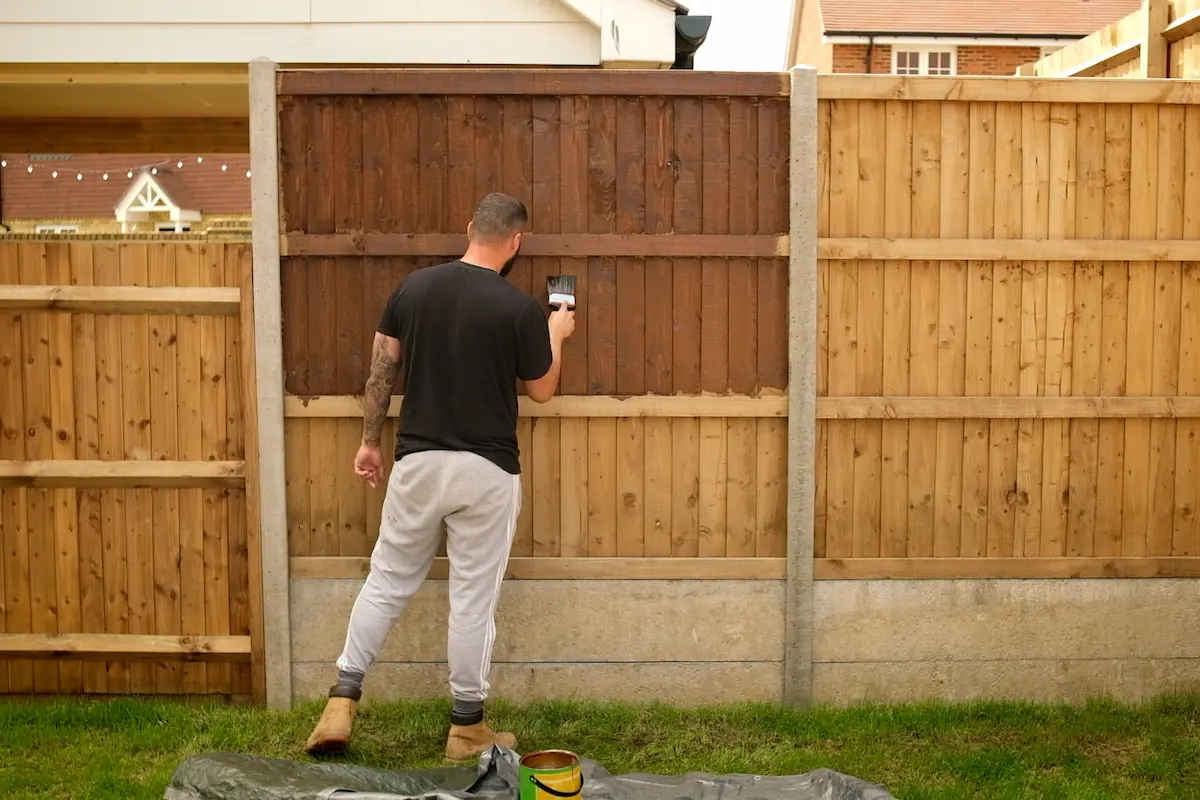
What does Burma Teak look like?
Colour charts and online photographs provide useful guidance, but the timber underneath will always influence the final appearance of a translucent woodstain.
The same colour can look different depending on:
- The species of wood
- The natural tone of the timber
- The surface texture
- Previous treatments
- The number of coats
- Lighting conditions
Yasmin and Tom felt that Burma Teak delivered the warm fence colour they had hoped for. Tom described it as “exactly what I wanted”.
A test area remains the best way to judge any translucent finish before treating a complete fence.
Making the pergola a feature with Cuprinol Garden Shades
Tom had built the timber pergola himself, although Yasmin took responsibility for choosing its colour.
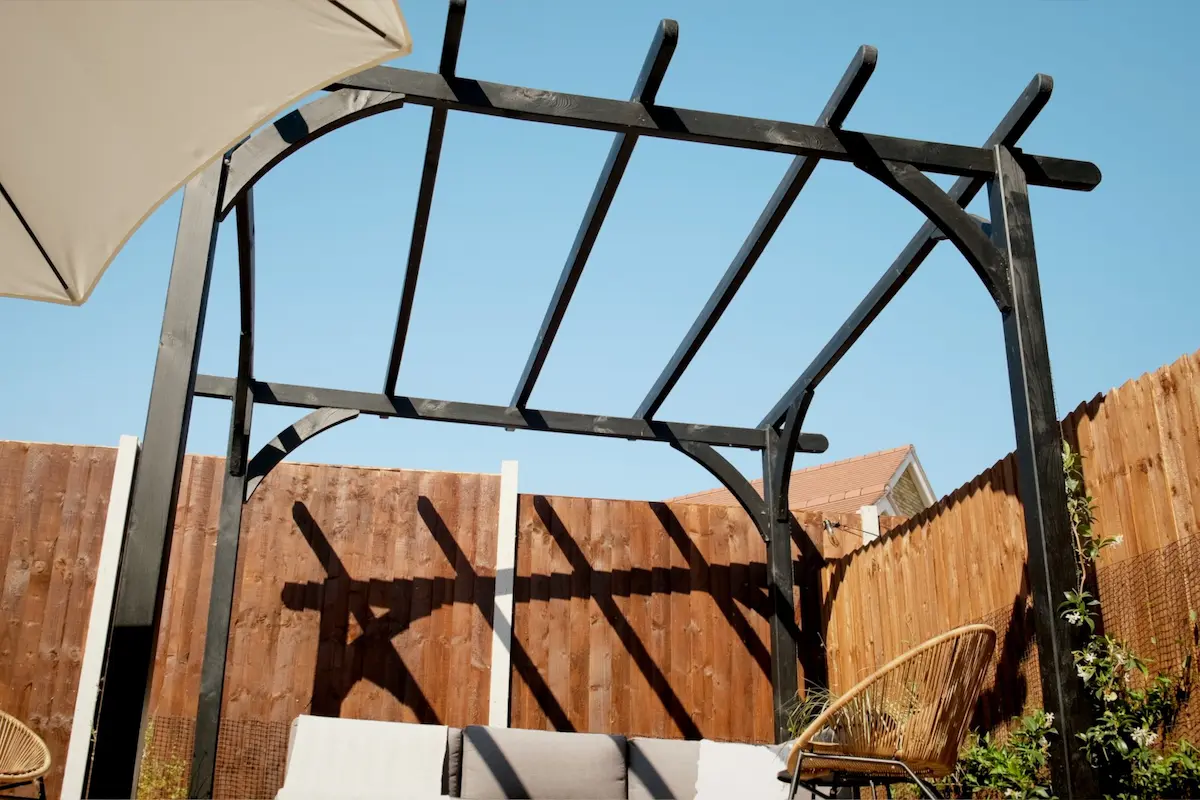
She selected Cuprinol Garden Shades in Black Ash, which created a bold contrast against the warm brown fence and decking.
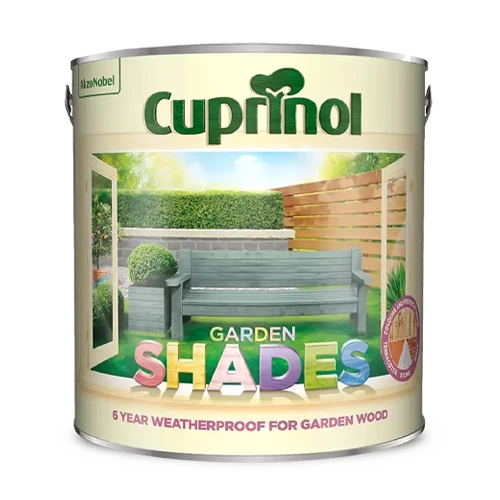
Cuprinol Garden Shades
A water-based, opaque garden paint for fences, sheds, pergolas and other
exterior garden timber. Yasmin and Tom used Black Ash to turn
their wooden pergola into a bold feature against the warmer fence and decking.
No. of coats: 2
Sizes: 125ml, 1L, 2.5L and 5L
Coverage: Up to 10m² per litre
Find out more
Cuprinol Garden Shades produces an opaque matt finish, so it creates a much stronger colour change than a translucent woodstain. However, it still allows the natural texture of the timber to remain visible.
The dark finish turns the pergola into a defined architectural feature. It also helps frame the seating area and gives the garden a more considered, finished appearance.
Why Black Ash works in this garden
Yasmin initially saw the dark pergola as something of a gamble because the rest of the garden contained rustic materials and several different shades of brown.
In practice, the contrast helps rather than clashes.
The black pergola:
- Breaks up the brown timber tones
- Creates a focal point
- Frames the outdoor seating area
- Complements green foliage
- Gives the new structure a more established appearance
By the end of the makeover, Yasmin described the pergola as her favourite part of the garden.

Applying Garden Shades to a pergola
Pergolas contain plenty of joints, corners, overhead sections and exposed end grain. A methodical approach makes the job easier.
Start with the difficult areas, including the joints and inside corners, before coating the longer beams and posts.
Apply the paint along the direction of the grain and brush out any drips before they dry. Dark colours can make missed areas easier to spot, especially where pale timber shows through at joints and edges.
Yasmin found that the paint provided good coverage without excessive dripping. More importantly, the finished colour matched what she had imagined when choosing it online.
Avoid applying garden paint in strong direct sunlight. Yasmin and Tom found the hot conditions made the work more difficult, even though they remained delighted with the final result.
A shaded surface usually gives you more working time and allows the paint to dry more evenly.
Protecting the deck with Liberon Decking Oil in Medium Oak
The deck needed a product designed for horizontal timber and regular foot traffic.
Yasmin and Tom chose Liberon Superior Decking Oil in Medium Oak. The oil enhances the grain and natural character of the boards while adding a warmer, richer colour.
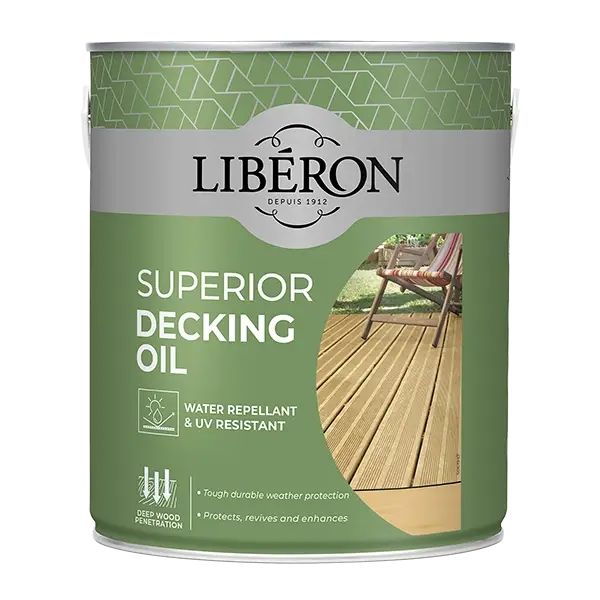
Liberon Superior Decking Oil
A durable, water-resistant decking oil with UV filters, designed to
protect and enhance exterior timber. Yasmin and Tom chose
Medium Oak to enrich the deck boards and complement the warm fence.
No. of coats: 2
Sizes: 2.5L and 5L
Coverage: Up to 20m² per litre
Find out more
Liberon Decking Oil contains UV filters that help reduce fading from sunlight. It also adds water resistance and protects the timber from general weathering.
Unlike a thick surface coating, decking oil penetrates the boards. This makes it better suited to movement and foot traffic than an ordinary exterior paint or varnish.
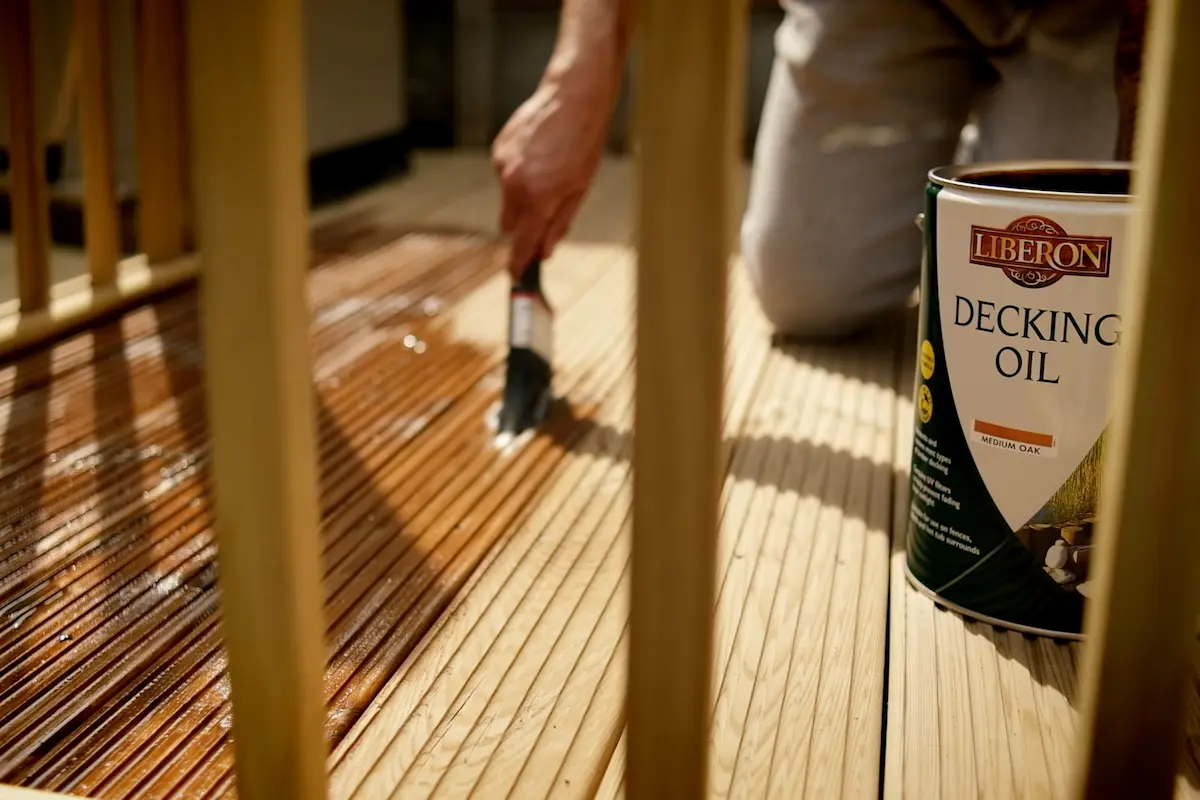
How to apply decking oil correctly
Clean and dry the decking before application. Even new boards can carry dust, dirt and construction residue.
Apply the oil in manageable sections and follow the direction of the grain. Pay attention to the ends of the boards and any exposed edges.
The timber should absorb the product rather than leave it sitting on top.
Do not assume that a thicker application will provide better protection. Excess oil can create:
- Sticky patches
- Uneven colour
- Glossy areas
- Longer drying times
- A surface that attracts dirt
Wipe away any oil that the decking has not absorbed, following the instructions on the tin.
Use oily cloths safely
Oil-soaked cloths can generate heat as the oil dries.
Do not leave used cloths crumpled in a pile or throw them straight into a bin. Lay them out flat to dry outdoors, away from buildings and combustible materials, before disposing of them according to the product instructions.
Why not use one product on everything?
Using one finish across the whole garden may sound easier, but it often compromises either the appearance or performance.
Each product in this project performs a specific role.
Sadolin Classic All Purpose Woodstain
This product gives the fence a warm, translucent colour while keeping the grain visible.
Cuprinol Garden Shades
This opaque garden paint creates a strong decorative statement on the pergola.
Liberon Superior Decking Oil
The penetrating oil protects a horizontal walking surface without forming an unsuitable painted film.
The combination creates more visual interest than a single finish would have achieved. It also gives each surface protection appropriate to its purpose.
The finished garden
By the time Yasmin and Tom returned to the garden, the transformation extended beyond the timber treatments.
They had introduced plants and started adding the final decorative touches. However, the finished fence, pergola and decking created the structure that tied the whole design together.
The Burma Teak fence provides a warm backdrop. The Black Ash pergola stands out as the main feature, while the Medium Oak deck complements the other timber without making the space feel too uniform.
The pergola proved particularly successful. Yasmin had wanted it to look black from the beginning, and the completed structure delivered the contrast she had pictured.
She explained that completing the work in the sun had proved difficult, but the finish made the effort worthwhile.

Maintaining the finished timber
Treating new wood marks the start of the maintenance process rather than the end.
Inspect each surface at least once a year, ideally during spring.
Look for:
- Fading
- Dry or absorbent deck boards
- Scratches and knocks
- Areas where water no longer beads
- Green algae or dirt
- Exposed timber at joints and edges
- Localised peeling or flaking
Clean the surfaces before applying any maintenance coats. Do not automatically apply more product simply because the timber looks dirty.
A proper clean may restore the appearance without further treatment.
Decking often needs more frequent attention than vertical timber because it receives more sunlight, standing water and physical wear. Maintaining it regularly should prove far easier than allowing the boards to weather heavily before treating them again.
Common mistakes to avoid
Treating damp timber
Wet timber can prevent the product from penetrating or drying correctly. Give recently cleaned or rain-soaked wood enough time to dry.
Painting in direct sunlight
Strong sunlight can heat the surface and make a product dry too quickly. This may lead to visible brush marks, poor penetration or uneven colour.
Choosing a colour without testing it
Timber species and natural colour affect the final result. Test the product before coating a large area.
Applying garden paint to decking
Garden paint suits fences, sheds and decorative timber, but it does not necessarily withstand foot traffic. Always use a product specifically designed for decking.
Leaving excess decking oil on the surface
Once the wood stops absorbing the oil, wipe away the excess. Do not allow it to form a sticky layer.
Ignoring joints and end grain
These vulnerable areas can absorb moisture quickly. Coat them carefully whenever access allows.
Frequently asked questions
Can Sadolin Classic be used on rough-sawn fencing?
Yes. Sadolin Classic suits a wide range of exterior timber, including rough-sawn and smooth wood. Rough timber may absorb more product, so actual coverage can vary.
Does Cuprinol Garden Shades hide the wood grain?
It creates an opaque colour, but the natural texture of the timber normally remains visible through the matt finish.
Can Cuprinol Garden Shades be used on decking?
No. Use it on suitable garden structures such as fences, sheds and pergolas rather than surfaces that receive regular foot traffic.
Does Liberon Decking Oil change the colour of the timber?
Clear decking oil can deepen the wood’s natural colour, while tinted versions such as Medium Oak add a more noticeable tone. Always test the colour on a small area first.
Can Liberon Decking Oil be used on fences and sheds?
Liberon Decking Oil can also suit other exterior timber, including fences and sheds. However, a dedicated fence paint or woodstain may offer a wider choice of decorative effects.
How often should outdoor timber be retreated?
There is no fixed interval for every garden. Exposure, timber type, colour and product choice will all affect maintenance. Inspect the surface each year and retreat it when it starts to lose protection.
Protecting the work behind the garden
Designing and building a garden takes time, money and effort. The finished plants and furniture may attract the most attention, but the fencing, decking and structural timber form the framework of the space.
Yasmin and Tom’s garden demonstrates how suitable finishes can protect that work while also becoming part of the design.
Sadolin Classic in Burma Teak brings warmth to the fencing. Cuprinol Garden Shades in Black Ash gives the pergola its own identity. Liberon Decking Oil in Medium Oak enhances and protects the deck beneath it.
Choosing the right product for each surface helps the garden look better now and should keep the timber in good condition for much longer.
Explore our full range of garden paints, exterior woodstains and decking oils, or speak to our team for advice on the best finish for your garden project.
Read More Decking Articles in This Series
Why Use A Decking Preserver
Do you really need a decking preserver, or can you go straight in with your oil, paint or stain? Read more
Decking and Wood Revivers
Don’t panic, your decking may simply need a thorough clean and revival. Read more
How to restore and oil your decking
The complete process to restore neglected wooden decking back to its former glory. Read more
How to paint your decking
Transform your weathered decking into a stunning outdoor feature with our step-by-step expert guide. Read more
Help with your decking dilemma
Oil? Stain? Paint?
We help you choose.
Read more