
If you’re planning to paint the exterior of your home, September and October can be some of the best – and most frustrating – months to get the job done.
The weather can still be warm enough for exterior painting, but shorter days, cooler nights, rain and morning condensation all become increasingly important as autumn progresses.
So, how late in the year can you paint masonry?
The answer isn’t simply a date in the calendar. The important things are the temperature of the wall, whether the masonry is dry, the forecast for rain and frost, and whether the paint will have enough time to dry before evening condensation sets in.
For most masonry paints, September is generally a very good month for exterior painting, while October can still offer plenty of suitable opportunities. By late October and into November, however, the weather becomes much less predictable and you need to be considerably more selective about when you paint.
The paint you choose also matters. Farrow & Ball Exterior Masonry, Earthborn Silicate Masonry Paint, Sandtex Smooth Masonry Paint and Sandtex Trade 365 All Weather all have different characteristics, making some better suited to particular types of masonry and painting conditions.
When is the Best Time to Paint Masonry in Autumn?
September: usually the best opportunity
September is often an excellent month for exterior masonry painting in the UK. Walls have retained some of the warmth of summer, daytime temperatures are generally more favourable and there are still plenty of daylight hours for paint to dry properly.
If you’re planning an exterior painting project, September is therefore a good time to aim for.
Look for a period of several dry, settled days rather than relying on a single good afternoon. The masonry needs to be completely dry before painting, and you should allow enough drying time before temperatures fall in the evening.
The temperature of the masonry itself matters. A wall that has been in shade all day can be significantly cooler than the air temperature.
October: possible, but be more selective
October can still provide good opportunities for masonry painting, particularly during a mild, settled spell. However, as the month progresses, conditions become less predictable.
Shorter days mean less time for the paint to dry, while cooler nights, morning dew and rainfall become increasingly common. This makes it more important to check the forecast and the manufacturer’s instructions before starting.
Early October may offer conditions very similar to September. By late October, however, you’ll want a particularly good weather window, with dry masonry, suitable temperatures and no imminent risk of rain or frost.
What about November?
By November, exterior masonry painting becomes considerably more weather-dependent. It isn’t necessarily impossible during a mild spell, but the combination of low temperatures, damp conditions and shorter daylight hours makes suitable opportunities harder to find.
If temperatures are consistently close to or below the minimum specified for your chosen paint, or the weather is cold, wet and unsettled, it may be better to wait until spring.
The key autumn painting conditions
Whenever you decide to paint, check the following before getting started:
- Temperature: Make sure both the air and masonry are within the manufacturer’s recommended temperature range.
- Dry masonry: Never paint onto a damp or recently rained-on wall.
- Rain: Check that there is enough time for the paint to dry before rain arrives.
- Overnight conditions: Allow sufficient drying time before evening temperatures drop and condensation forms.
- Frost: Avoid painting when frost is expected during the application or drying period.
- Daylight: Start early enough to give the paint plenty of time to dry naturally.
Don’t Forget About Condensation
One of the easily overlooked problems with autumn painting is evening condensation.
Paint needs time to form and dry properly. As the sun goes down, the temperature of the wall can fall and moisture can condense on the surface.
This is one reason why painting early in the day can be preferable in autumn.
Farrow & Ball specifically recommends applying Exterior Masonry early in the day so that it has time to dry before evening condensation occurs.
If you’re painting in October, think about the whole drying period, not just the temperature at the moment you pick up the brush.
Preparing Masonry for Autumn Painting
Good preparation is just as important as choosing the right weather.
Before painting, make sure the masonry is:
- Clean
- Completely dry
- Free from loose or flaking paint
- Free from algae, moss and other organic growth
- Free from dust, grease and other contaminants
- Properly repaired where necessary
Don’t use paint to disguise an underlying damp problem. If the wall has persistent damp, rising damp, salt deposits or water penetration, deal with the cause before painting.
Preparation requirements also vary between products. Earthborn Silicate Masonry Paint, for example, is specifically designed for mineral surfaces and has different primer requirements depending on whether you’re painting bare masonry or an existing conventional masonry coating.
Choosing the Right Masonry Paint
Once you’ve established that your wall is suitable for painting, the next question is which paint to choose.
There isn’t necessarily one “best” masonry paint, but we have featured 4 products that we recommend below.
Instructions should always be followed, as minimum temperatures and drying requirements vary between products.
Farrow & Ball Exterior Masonry Paint
If the appearance of the finished wall is a major consideration, Farrow & Ball is an appealing option.
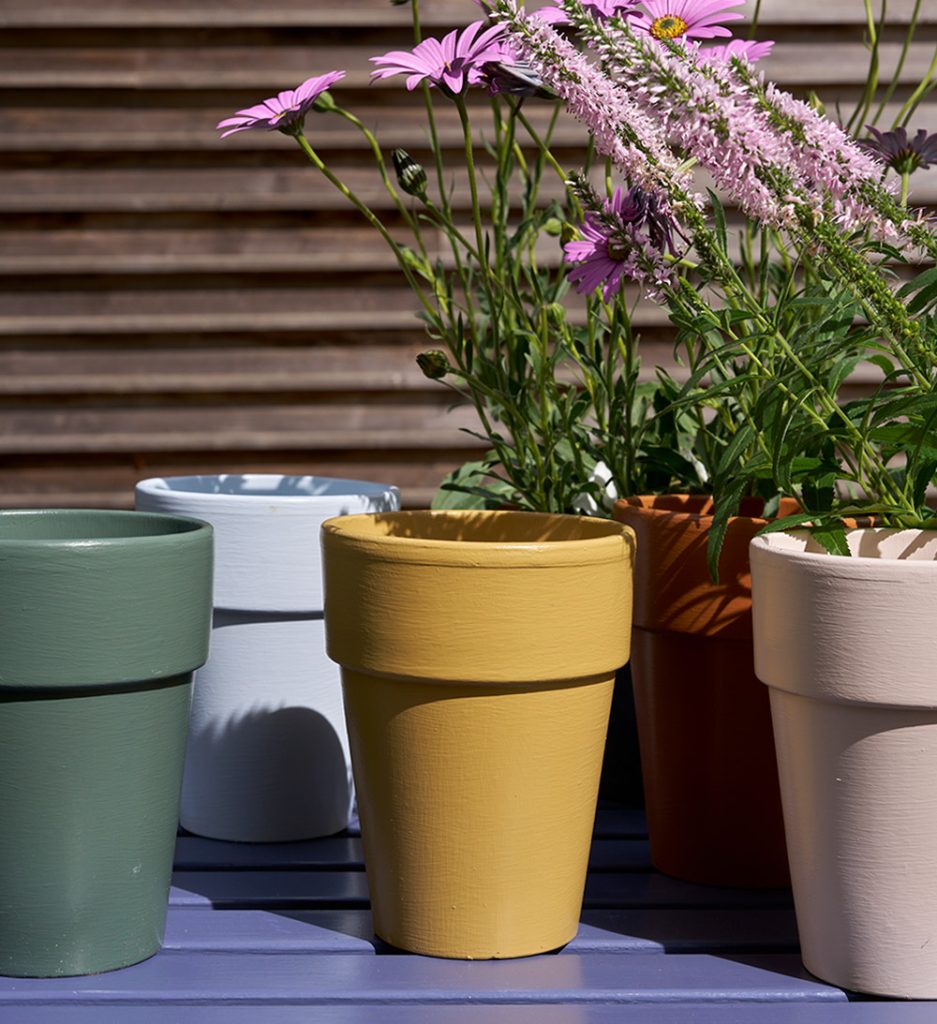
Exterior Masonry has a very flat 2% matt finish, with a wide range of Farrow & Ball colours. It is water resistant while offering a high level of water-vapour permeability, and it is protected against fungi and algae. Coverage is up to approximately 8m² per litre per coat.
The main consideration for autumn work is its 10°C minimum application temperature. That makes choosing the right weather window particularly important as the season progresses.
Best suited to: homeowners who want a highly matt, decorative finish and the Farrow & Ball colour range, provided the masonry and weather conditions are suitable.
Earthborn Silicate Masonry Paint
Earthborn Silicate Masonry Paint is the most distinct of the three.
Rather than being a conventional masonry coating, it uses potassium silicate as its binder and is designed to form a mineral bond with suitable masonry when used with the appropriate primer system.
Its major advantage is breathability. Earthborn describes it as highly breathable and particularly suitable for mineral substrates, traditional buildings and lime-based materials. Its current technical information gives a water-vapour resistance Sd value of 0.01m and describes the paint as Class 1 highly vapour permeable.
It has a soft matt finish, is naturally resistant to algae and mould, and Earthborn states that the full Silicate Primer and Silicate Masonry Paint system can last 15–20 years, depending on location and weather.
There is a little more to the application process, however. It isn’t simply a case of opening a tin and painting any surface. The correct primer needs to be selected according to the substrate and existing coating.
Best suited to: traditional and historic buildings, lime render and suitable bare mineral masonry where high breathability is particularly important.
Sandtex Smooth Masonry Paint
Sandtex Microseal is a practical option for a wide range of exterior masonry surfaces.
Its microporous formulation is designed to allow moisture vapour to escape while protecting against water ingress. Sandtex also highlights its resistance to mould and algae, dirt-resistant properties and resistance to peeling and flaking.
For autumn painting, one of its biggest advantages is speed. Sandtex states that Microseal is rainproof in one hour, although the masonry must be dry and the manufacturer’s application conditions must be followed. It has a minimum application temperature of 8°C and a stated 15-year trusted durability.
The smooth version covers approximately 12–16m² per litre, making it an economical choice for larger areas. There is also a fine-textured version, which is useful where you want to introduce a little texture to the finish or disguise minor imperfections.
One important qualification is that Sandtex does not recommend Microseal for common, Fletton or engineering-type bricks. Always check that the product is suitable for your particular substrate.
Best suited to: a wide range of sound exterior masonry, particularly where you want a durable, practical and relatively fast-drying finish.
Sandtex Trade 365 All Weather
Sandtex Trade 365 All Weather is designed for exterior masonry when conditions become colder and less predictable.
Its high-performance Pliolite resin formulation allows it to be applied at temperatures as low as -10°C, making it a strong choice for extending the painting season into the later months of the year. It is also resistant to showers after just 20 minutes, helping when weather windows are short.
It provides up to 20 years’ protection, with a smooth matt finish and coverage of up to 10m² per litre.
Best suited to: exterior masonry projects in colder or changeable weather, particularly when you need to keep painting later into the year.
Masonry Paint Comparison
| Farrow & Ball Exterior Masonry | Earthborn Silicate Masonry Paint | Sandtex Smooth Masonry Paint | Sandtex Trade 365 All Weather | |
| Main strength | Colour choice and very matt finish | Breathability and mineral compatibility | Durability and fast rainproofing | Can be applied in very low temperatures |
| Finish | Flat matt, 2% sheen | Soft matt | Smooth or fine textured | Smooth matt finish |
| Minimum temperature | 10°C | 8°C | 8°C | -10°C |
| Approx. coverage | Up to 8m²/L | Approx. 6m²/L | 12–16m²/L smooth | Up to 10 m2 / L |
| Best for | Decorative exterior finishes | Traditional/mineral masonry | General exterior masonry | Masonry where high performance is needed |
| Any Drawbacks? | More restrictive temperature requirement | More involved preparation/system | Not suitable for every brick type | Limited colour range |
Autumn Masonry Painting: The Bottom Line
There is no fixed date when exterior masonry painting suddenly becomes impossible.
September and early October generally offer the best opportunities, but a dry, mild spell in late October can still be suitable. Conversely, a cold or damp period in September may be completely unsuitable.
Instead of asking whether it’s “too late” to paint, look at the conditions you have available: is the masonry dry, is the temperature suitable for your chosen paint, and will you have enough time for it to dry before rain, frost or evening condensation?
If the answer to all three is yes, you may still have a good painting window.
FAQ
Can you paint masonry in September?
Yes. September is often one of the better months for exterior masonry painting in the UK, provided the masonry is dry and the temperature and weather conditions meet the requirements of your chosen paint.
Can you paint masonry in October?
Yes, provided you have a suitable period of dry, mild weather. As October progresses, cooler nights, condensation and rain make successful painting more difficult.
What is the best temperature for painting masonry?
Follow the manufacturer’s instructions for the specific product. For the paints discussed here, Farrow & Ball specifies a minimum of 10°C, while Earthborn Silicate Masonry Paint and Sandtex Microseal specify 8°C under their respective application conditions. Sandtex Trade 365 All Weather is your go to for painting in really cold conditions, as low as -10°C.
Can you paint masonry if rain is forecast?
It is best not to. Masonry should be dry before painting, and you need to give the coating adequate time to dry. Always follow the specific manufacturer’s instructions.
Is breathable masonry paint better?
Not necessarily for every building. Breathability is particularly important where the substrate needs to allow moisture vapour to pass through, such as some traditional and lime-based buildings. The correct paint depends on the masonry, existing coating and construction of the building.
Is September better than October for masonry painting?
Generally, September offers a larger margin for error because temperatures and daylight hours are usually more favourable. However, a dry, mild day in October can be better for painting than a cold, wet day in September.
When should I stop painting masonry for the year?
There is no universal cut-off date. Once temperatures are consistently close to or below your paint’s minimum application temperature, or rain, frost and condensation make suitable drying conditions difficult to find, it is usually better to wait.
Where can I find a wider selection of masonry paints?
Wood Finishes Direct offers a full range of masonry paint from the best brands, including the products featured in this article.
If you still have questions, why not call our wood finish and paint experts on 01303 213838